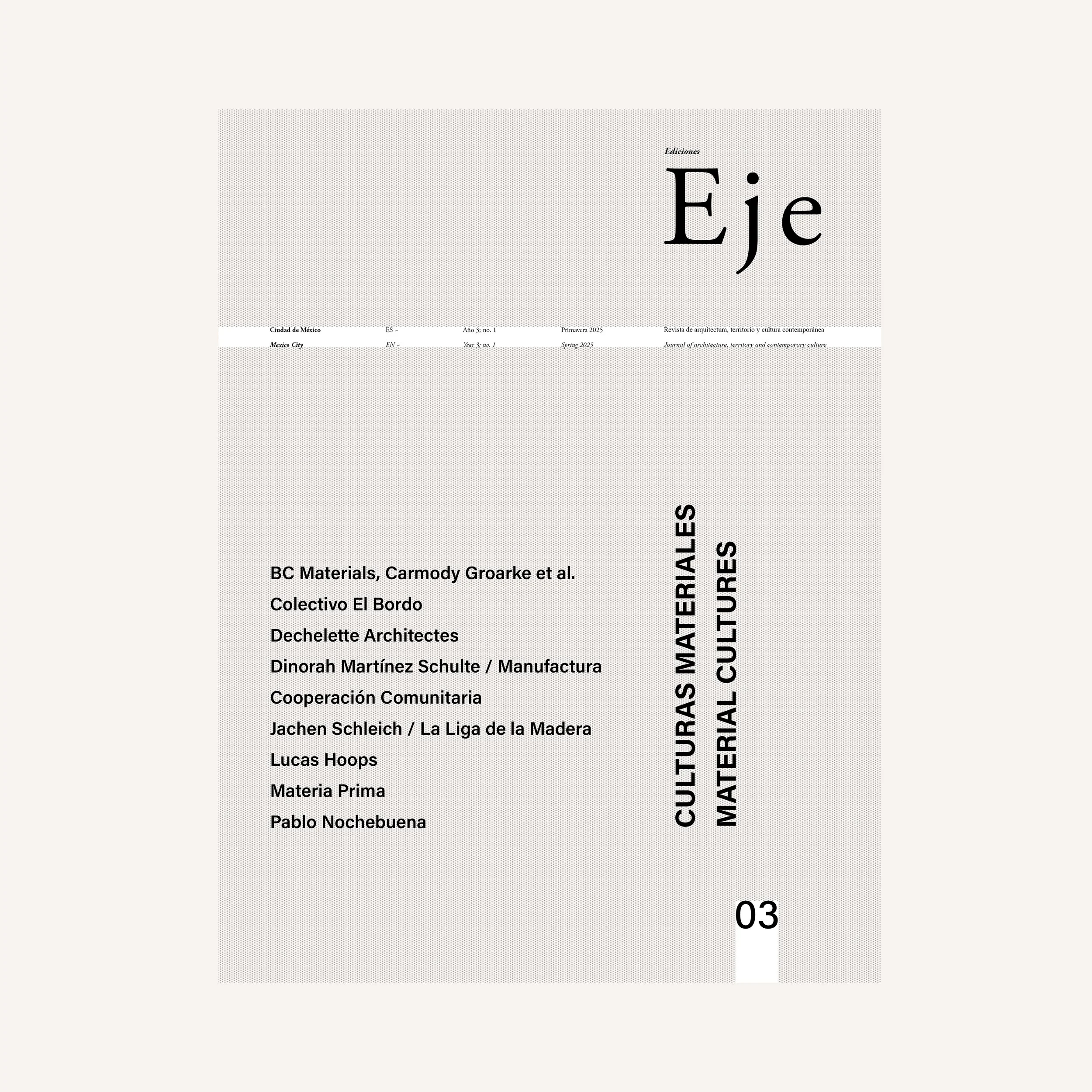
Eje 03: Culturas Materiales // Material Cultures

$300.00

El Informe del IPCC (2024) señala claramente que, para limitar el calentamiento global entre 1.5° y 2° Celsius, es necesario realizar reducciones rápidas, profundas y en la mayoría de los casos inmediatas de las emisiones de gases de efecto invernadero (fig. 1). Las políticas actuales implementadas por los países firmantes del Acuerdo de París (2020) no son ni de cerca lo suficientemente ambiciosas para alcanzar este objetivo.

La industria de la construcción y edificación representa casi el 40% de las emisiones globales de carbono, según la revista Sustainable Building and Architecture, al considerar tanto la construcción (11%) como el mantenimiento de los edificios (28%) —lo que incluye aire acondicionado, calefacción central y consumo general de energía. México, país donde se edita y publica esta revista, al estar cerca del ecuador, está expuesto no solo a cambios climáticos significativamente dañinos y a la reducción de zonas habitables durante el año, sino también a afectaciones en su producción anual de maíz y pescado (fig. 2), que constituyen la base de la dieta nacional, tanto en el interior del país como en las costas.

Esta edición de Eje busca reunir aportaciones que señalen prácticas negativas existentes, así como también que presenten prácticas emergentes que ofrezcan soluciones tangibles y prácticas a la crisis climática. Si bien el informe del IPCC es una advertencia contundente sobre el rumbo que llevamos, también ofrece esperanza: los cambios en la industria de la construcción podrían reducir hasta un 60% las emisiones de gases de efecto invernadero (fig. 3). Esperamos que esta edición sirva como referencia y estímulo para una cultura de la arquitectura y la construcción más responsable y sostenible, que priorice el compromiso ambiental y social por encima de la comodidad y el estatus quo.

~

The IPCC Report (2024) outlines clearly that in order to limit global heating to between 1.5° Celcius - 2° Celcius there is a requirement for ‘rapid, deep and in most cases immediate greenhouse gas emission reductions’ (fig. 1). The current policies implemented by the signatories of the Paris Climate Accord (2015) are currently nowhere near ambitious enough to achieve this goal.

The construction and building industry accounts for almost 40% of global carbon emissions according to the Sustainable Building and Architecture Magazine when accounting for both construction (11%)  and building maintenance (28%) - air conditioning, central heating, and general energy consumption. Mexico, where this journal is edited and published, as a country close to the equator, stands to experience  not only significantly damaging changes to its climate and the areas that are inhabitable during the year but also to its annual yield of maize and fish (fig. 2), the basis of the national diet both inland and on the coasts. As such, climate justice must be seen as social justice if we are to ensure that those least able to prepare and protect themselves from the implications of climate change are not the ones to bear the brunt of these impending changes.

This edition of Eje seeks to draw together contributions that draw attention to existing negative practices as well as provide reference to emerging practices that offer tangible and practical solutions to the climate crisis. Whilst the IPCC report is a stark warning of where we are headed, it also contains hope that changes to the construction industry can result in potential reduction of 60% of greenhouse gas emissions (fig.3). We hope that this edition can serve as a reference and a stimulus for a more responsible and sustainable architecture and construction culture that prioritizes environmental and social responsibility over ease and the status quo.

El Informe del IPCC (2024) señala claramente que, para limitar el calentamiento global entre 1.5° y 2° Celsius, es necesario realizar reducciones rápidas, profundas y en la mayoría de los casos inmediatas de las emisiones de gases de efecto invernadero (fig. 1). Las políticas actuales implementadas por los países firmantes del Acuerdo de París (2020) no son ni de cerca lo suficientemente ambiciosas para alcanzar este objetivo.

La industria de la construcción y edificación representa casi el 40% de las emisiones globales de carbono, según la revista Sustainable Building and Architecture, al considerar tanto la construcción (11%) como el mantenimiento de los edificios (28%) —lo que incluye aire acondicionado, calefacción central y consumo general de energía. México, país donde se edita y publica esta revista, al estar cerca del ecuador, está expuesto no solo a cambios climáticos significativamente dañinos y a la reducción de zonas habitables durante el año, sino también a afectaciones en su producción anual de maíz y pescado (fig. 2), que constituyen la base de la dieta nacional, tanto en el interior del país como en las costas.

Esta edición de Eje busca reunir aportaciones que señalen prácticas negativas existentes, así como también que presenten prácticas emergentes que ofrezcan soluciones tangibles y prácticas a la crisis climática. Si bien el informe del IPCC es una advertencia contundente sobre el rumbo que llevamos, también ofrece esperanza: los cambios en la industria de la construcción podrían reducir hasta un 60% las emisiones de gases de efecto invernadero (fig. 3). Esperamos que esta edición sirva como referencia y estímulo para una cultura de la arquitectura y la construcción más responsable y sostenible, que priorice el compromiso ambiental y social por encima de la comodidad y el estatus quo.

~

The IPCC Report (2024) outlines clearly that in order to limit global heating to between 1.5° Celcius - 2° Celcius there is a requirement for ‘rapid, deep and in most cases immediate greenhouse gas emission reductions’ (fig. 1). The current policies implemented by the signatories of the Paris Climate Accord (2015) are currently nowhere near ambitious enough to achieve this goal.

The construction and building industry accounts for almost 40% of global carbon emissions according to the Sustainable Building and Architecture Magazine when accounting for both construction (11%)  and building maintenance (28%) - air conditioning, central heating, and general energy consumption. Mexico, where this journal is edited and published, as a country close to the equator, stands to experience  not only significantly damaging changes to its climate and the areas that are inhabitable during the year but also to its annual yield of maize and fish (fig. 2), the basis of the national diet both inland and on the coasts. As such, climate justice must be seen as social justice if we are to ensure that those least able to prepare and protect themselves from the implications of climate change are not the ones to bear the brunt of these impending changes.

This edition of Eje seeks to draw together contributions that draw attention to existing negative practices as well as provide reference to emerging practices that offer tangible and practical solutions to the climate crisis. Whilst the IPCC report is a stark warning of where we are headed, it also contains hope that changes to the construction industry can result in potential reduction of 60% of greenhouse gas emissions (fig.3). We hope that this edition can serve as a reference and a stimulus for a more responsible and sustainable architecture and construction culture that prioritizes environmental and social responsibility over ease and the status quo.

Participantes // Participants

Alejandro Leal Menegus

Athenea Papacostas

Carles Oliver Barceló

Coonvite Arquitectura Cooperativa

Entropía Arquitectura Adaptativa

Fernanda Chávez Pérez

Juan Carlos Cuock Espinosa

Lucía Martín López

Mariana Braga Martins

Matthieu Baumgarten

Onnis Luque

Rodrigo Durán López

Rosalba González Loyde

Tatiana Bilbao

Información // Information

Eje 02 fue publicado en abril de 2024 en la Ciudad de México.

Eje 02 es impreso por Nova Gráficos en la Colonia Obrera, Ciudad de México en blanco y negro en papel blanco, reciclado Educación 75mg y Bond 120mg, y está compuesto en Garamond Pro y Acumin Variable Concept y tiene 112 páginas.

~

Eje 02 was published in April 2024 in Mexico City.

Eje 02 is printed by Nova Gráficos in the Colonia Obrera, Mexico City in black and white on white, recycled Educación 75mg and Bond 120mg and set in Garamond Pro and Acumin Variable Concept and runs to 112 pages.

Editores // Editors

Castaña Arango Medina, Daniela Núñez Ruiz, James O’Brien, Santiago Bonilla Hastings